
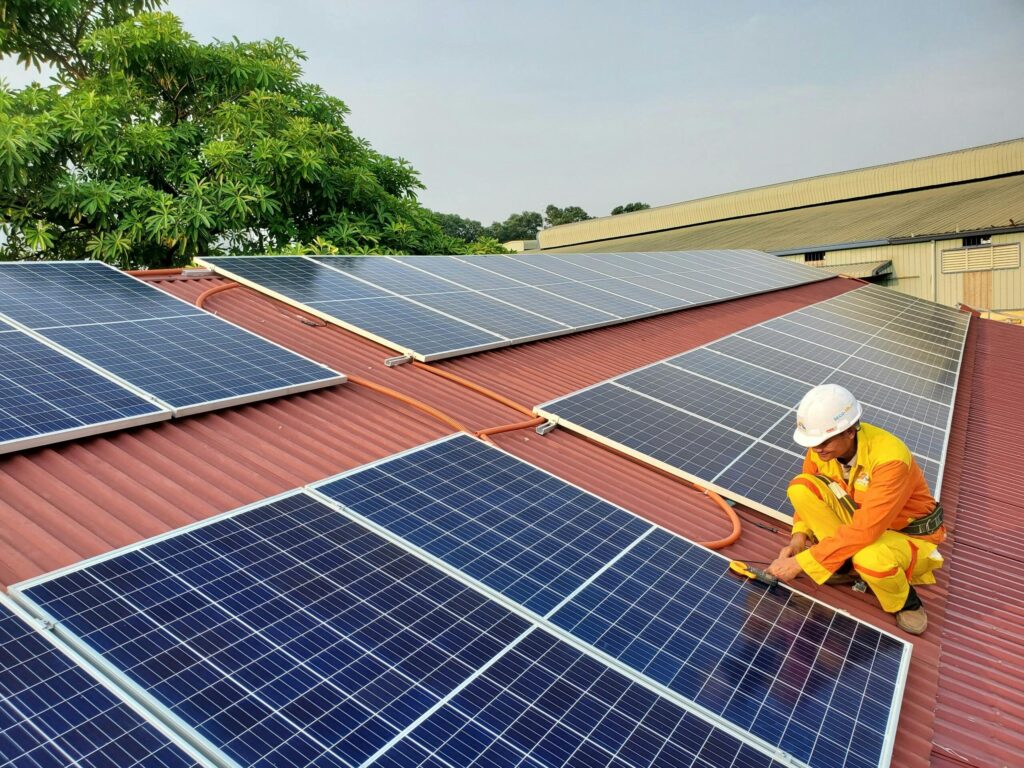
Solar power is the process of converting energy from sunlight into electricity using solar panels installed on a roof. The panels create a reaction that turns sunlight into electrical energy. They produce direct current (DC), which is sent to an inverter and converted into alternating current (AC) for household use.
Solar energy has become highly beneficial in Australia, offering lower electricity costs, reliable daytime power, and a renewable, low-emission energy source.
This section explains how solar power can be used in modern homes.
Key uses of solar energy
Heating water and supporting home systems
Solar power can be used to run hot water systems, heating boilers, and control systems, helping reduce reliance on grid electricity. Even when solar is not directly heating water, it can still power pumps, timers, and controllers that keep systems running efficiently. This reduces overall energy demand and lowers daily running costs.
For many households, this method is one of the simplest ways to integrate solar energy into everyday life without changing daily routines.
Supporting a home battery system
Adding a battery allows you to store excess solar energy and use it later in the evening or at night. This makes solar power more flexible and reliable, especially in Australia, where daylight hours change across seasons.
Stored energy can power lighting, appliances, and electronics after sunset. A battery system helps turn solar energy into a 24-hour household power source.
Powering a home office or workshop
For people working from home or running workshops, solar power can support computers, tools, lighting, and other equipment during the day.
This is particularly useful for home offices that operate for long hours. Solar energy can reduce electricity costs and improve overall energy efficiency while offering more independence from rising energy prices.
Running outdoor systems and equipment
Solar power can also be used for garden lighting, water features, electric gates, and outdoor security systems.
These systems often run for long periods and can contribute to higher electricity bills. Using solar energy helps reduce grid demand while keeping outdoor areas functional and efficient.
Powering everyday household appliances
Solar energy can also support common household appliances such as dishwashers, washing machines, refrigerators, and kitchen appliances.
When you use these devices during daylight hours, they can run directly from solar power. This helps shift energy usage to times when electricity generators produce it, reducing reliance on the grid without major lifestyle changes.
Creating a more resilient home energy system
When combined with battery storage, solar power can provide backup electricity during outages. Even limited stored energy can keep essential systems running, such as lighting, communications, and heating controls.
This adds a level of reliability that grid-only homes do not have, making solar part of a more stable and self-sufficient home energy setup.
Final thoughts
Solar power is a practical and efficient way to reduce electricity costs and improve energy independence in modern homes. With applications ranging from hot water systems to full home backup solutions, solar energy offers flexibility, sustainability, and long-term value.

